You leave for three days. Maybe a conference. Maybe a vacation you actually took for once. Maybe just a long weekend where you did not check Slack until Sunday night.
When you come back, the business is still running. Projects moved. Clients got answers. Invoices went out. Meetings happened.
But something is off.
A proposal went out at a price point you would not have approved. A client scope expanded without a conversation about margin. Someone made a hiring commitment you did not know about until the offer letter was signed.
Nothing broke. But the decisions that got made in your absence followed a different logic than the decisions you would have made yourself. And nobody noticed the gap. Including you, for a while.
That gap has a name. It is called decision drift. And it is one of the most expensive things happening inside founder-led businesses that nobody is measuring.
The Pattern Nobody Tracks
McKinsey research found that executives spend almost 40 percent of their time making decisions. And most of that time is poorly used. Only 37 percent of surveyed leaders said their organizations' decisions were both high quality and high velocity.
Here is what those numbers miss: the problem is not just the decisions the leader makes slowly. It is the decisions the team makes differently when the leader is not there to weigh in.
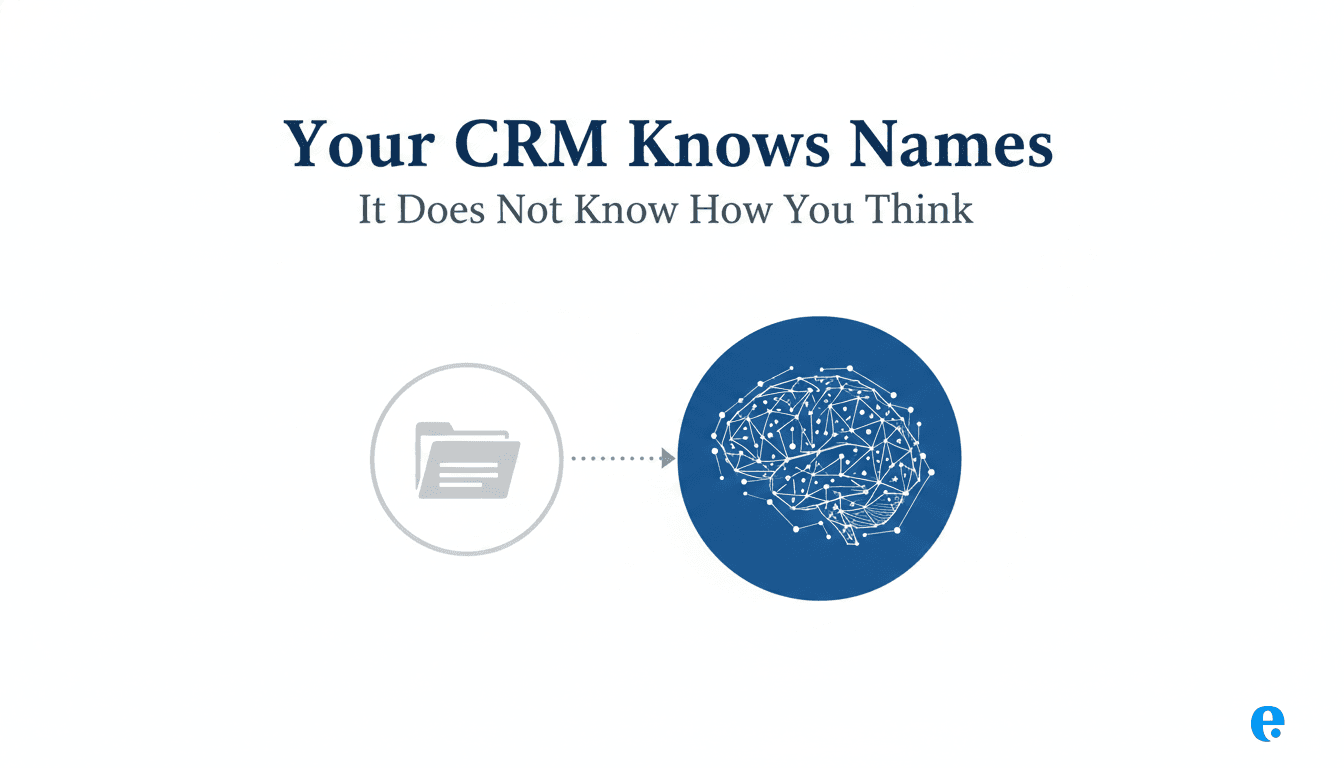
In a founder-led service business, the founder carries the decision framework. The pricing logic. The client instincts. The line between "yes, stretch for that client" and "no, that scope will kill our margin." That framework lives in the founder's head. It was never extracted. Never written down. Never made accessible to the people who have to make calls when the founder is unavailable.
So the team improvises. They use their best judgment. And their best judgment is good. Often very good. But it is not the same judgment the founder would have applied. Over weeks and months, those small deviations compound into something structural.
Decision Drift Is Not a People Problem
This is the part most founders get wrong. They come back, see the pricing mistake or the scope creep or the client commitment that should not have been made, and they think: "My team needs better training." Or: "I need to be more available." Or: "I should not have taken that time off."
All three responses make the problem worse.
Training does not transfer decision logic. It transfers process. Process tells people what steps to follow. It does not tell them how to weigh tradeoffs when two good options are sitting on the table and the founder is not answering their phone.
Being more available is overfunctioning. It is the founder becoming more embedded in operational decisions instead of less. And it guarantees that every future absence creates the same drift.
Blaming yourself for being away is the most expensive reaction of all. It teaches the founder that the only way to maintain decision quality is to never leave. That is not a business. That is a cage.
The real problem is not the people. It is the architecture. The business was never designed to make decisions at the same quality when the founder is out of the room.
The Gap Between Intended Authority and Actual Authority
Harvard Business Review published research on strategic delegation of decision-making. One of their core findings: not delegating creates a hidden cost. The outcomes leaders try to protect, clarity, accountability, momentum, begin to suffer because the team never develops the capacity to make those calls themselves.
But here is the nuance the research does not name directly. In founder-led service businesses, delegation is not the fix. Delegation says: "You make this call." It does not say: "Here is how I would make this call, the criteria I would use, the tradeoffs I would weigh, and the line I would not cross."
That distinction matters. There is a gap between giving someone authority and giving someone the intelligence to use that authority the way you would. Delegation transfers the power. It does not transfer the thinking.
I see this in every Brain Map I run. The founder describes their business and it sounds structured. They have a team. They have processes. They have people they trust. Then I ask one question: "If you disappeared for 30 days, which decisions would come out differently?"
The room goes quiet. Because the answer is always: most of them. Not because the team is bad. Because the decision logic was never packaged and made accessible to the team in the first place.
What Decision Drift Actually Costs
Gallup's organizational research shows that 70 percent of the variance in team engagement is explained by the quality of the manager or team leader. Read that differently for a founder-led business: 70 percent of how your team performs is shaped by the decision environment you create around them.
When that environment depends on your presence, every absence introduces friction. Not dramatic friction. Subtle friction.
A proposal goes out $4,000 lower than it should have. A client gets promised a timeline that forces overtime. A vendor relationship gets extended because nobody knew your criteria for switching. A hiring decision gets made based on urgency instead of the standards you carry in your head but never documented.
None of these are catastrophic. All of them erode margin. And they compound.
In a $3M service business, I have seen decision drift account for $180,000 to $300,000 in annual margin erosion. Not from bad decisions. From decisions that were slightly off center because the person making them did not have access to the logic the founder would have used.
That is Decision Cost. Not the cost of making wrong decisions. The cost of making decisions without the intelligence that should have informed them.
The Fix Is Not What You Think
The instinct is to create more rules. More SOPs. More approval workflows. More Slack channels where people tag you before they commit.
That is not architecture. That is surveillance. And it does not survive your next vacation.
The fix is packaging. Extracting the decision logic that lives in your head and making it accessible to the people, tools, and systems that need it when you are not in the room.
What does your team need to know to price a proposal without you? Not the price list. The thinking behind it. When do you stretch? When do you hold? What margin floor do you never go below? What client signals tell you to charge more?
What does your operations manager need to know to handle a scope conversation? Not the contract template. The instinct. When is scope creep actually relationship building? When is it margin destruction? Where is the line?
What does your senior closer need to know to make a commitment to a prospect? Not the sales script. The framework. What promises are safe? What timelines are realistic? What conditions have to be true before you say yes?
McKinsey found that organizations which make decisions quickly are twice as likely to make high quality decisions compared to slow decision makers. Speed comes from clarity. Clarity comes from packaged intelligence. When the criteria, tradeoffs, and boundaries are documented and accessible, people do not need to guess. They do not need to wait. They do not need you.
The Question Worth Sitting With
Next time you leave for a few days, do not ask "Did anything go wrong while I was out?"
Ask: "What decisions got made while I was out, and would I have made them the same way?"
If the answer is no, the issue is not your team's judgment. It is the gap between what you know and what your business can access without you.
That gap is Decision Cost. And it is running whether you are in the room or not.
The only question is whether you are going to keep carrying it yourself, or package it so the business can move without waiting on you.
Sources
- Harvard Business Review, Research: How to Delegate Decision-Making Strategically
- McKinsey, Three Keys to Faster, Better Decisions
- McKinsey, Effective Decision Making in the Age of Urgency
- Gallup, How to Improve Employee Engagement in the Workplace
- McKinsey, Untangling Your Organization's Decision Making
Built to Think
Your intelligence, packaged and deployed so the business can access it without waiting on you. See what a Brain Map reveals about your business.
See this in your own business.
We run a live workshop where we walk through exactly where your business intelligence is accessible and where it is still trapped. You will leave with a clear picture of what needs to be packaged first.
Join the Live Workshop