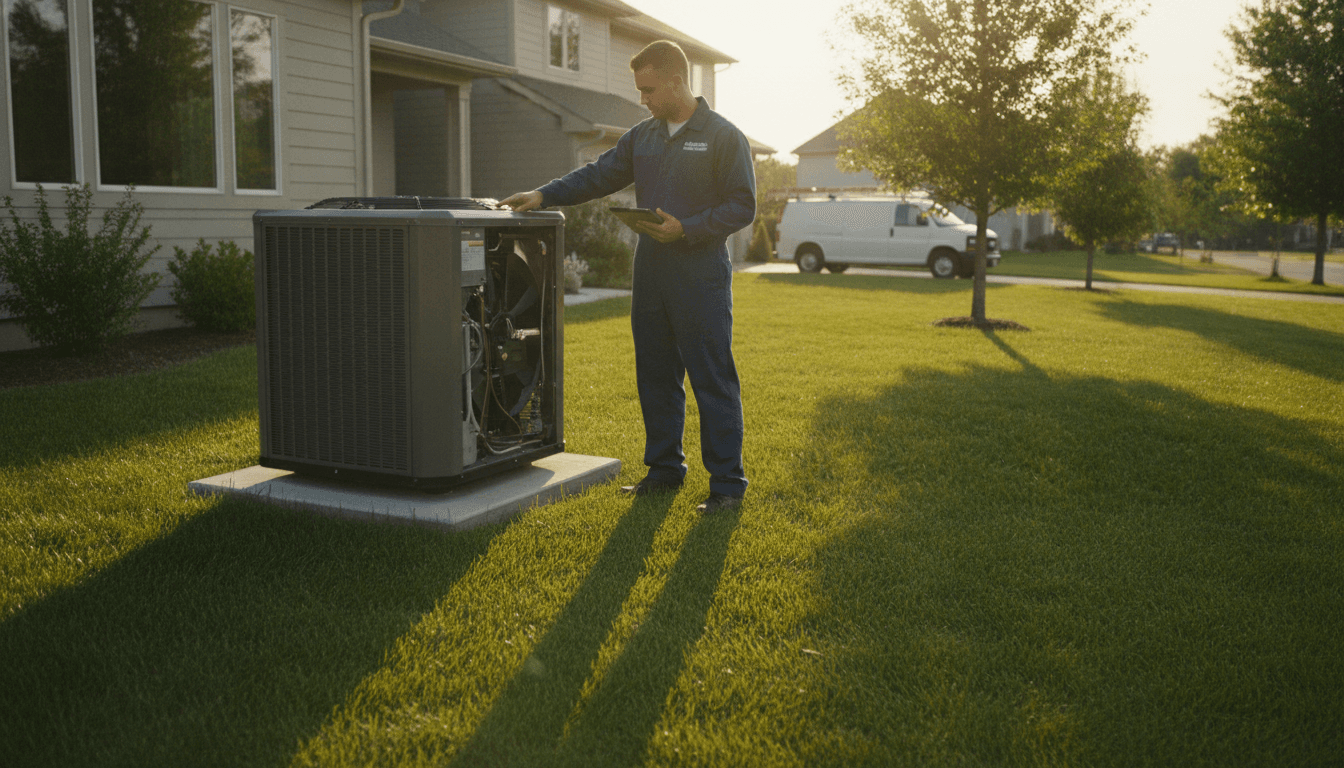
The Calendar That Was Already Full
In residential HVAC, the most valuable thing a company owns is not its trucks or its tools. It is a list of customers who already said yes to next year.
Most HVAC owners run the same business twice a year. Summer shows up and the phone rings. The crews work long days, the vans run hot, and revenue stacks fast. Then the heat breaks. October arrives. The phone gets quiet and the owner starts doing the thing that costs more than any slow month.
Chasing. Running ads. Calling past customers to ask if their system needs anything. Offering discounts to fill the schedule. The revenue that came easy in August has to be earned hard in fall.
But there is another kind of HVAC company. You have probably seen their trucks around town. Their schedule is full in October too. Not because they got lucky with the weather, but because they built something that fills the calendar before anyone picks up the phone.
The Gap That Shows Up Every Year
Preventive maintenance contracts now account for 39 percent of total U.S. HVAC services revenue. That number has climbed every year because the business case is clear on both sides. Homeowners pay a flat annual fee, get two visits a year, and never wonder if their system is going to quit in July. HVAC companies get scheduled revenue that does not depend on the weather.
Here is the gap: only 30 percent of homeowners have a maintenance plan in place. The other 70 percent call when something breaks.
For the company that calls first, that 70 percent is not a ceiling. It is a runway.
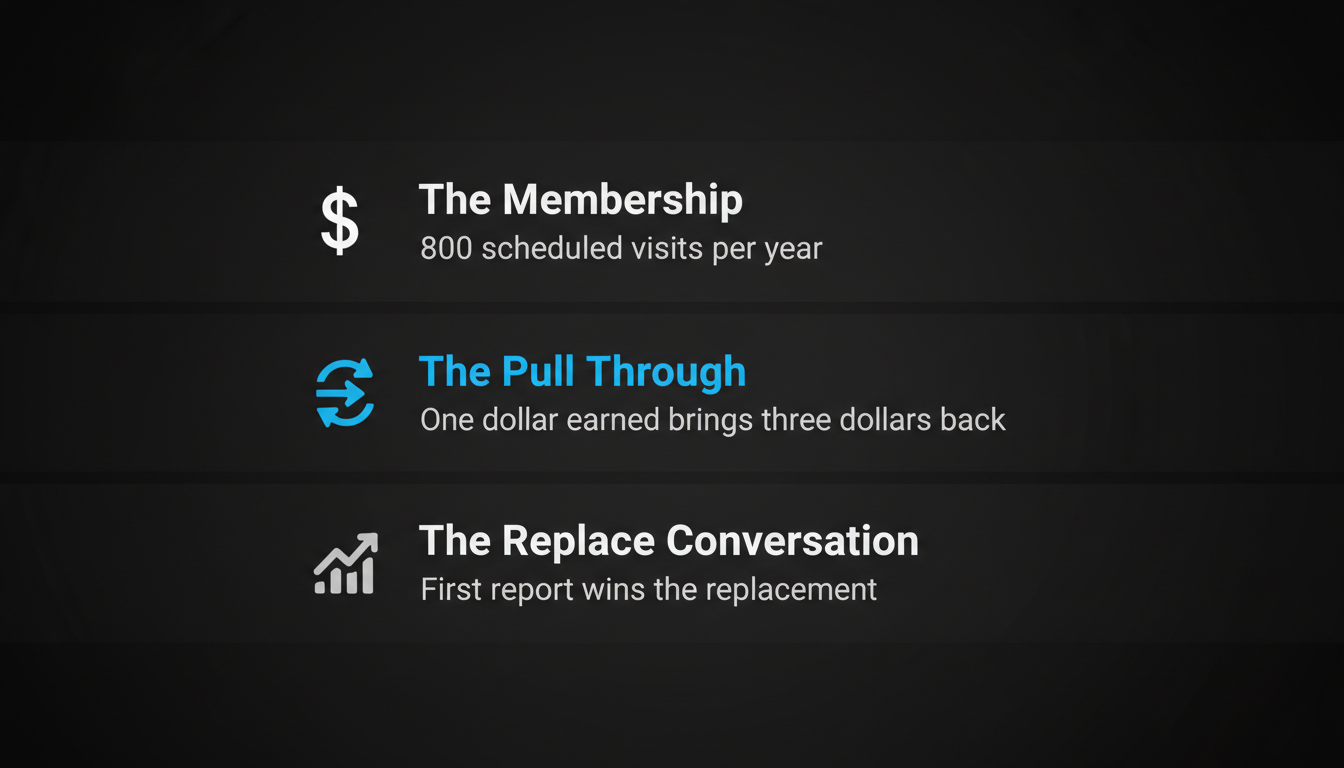
A residential HVAC company with 400 active maintenance agreements, at $300 each, is not just sitting on $120,000 in annual recurring revenue. It is sitting on a calendar that fills itself twice a year. Two visits per customer, 800 scheduled touchpoints, and each one is a door into the home. The system creates the opportunity before the customer ever thinks about calling.
The Visit That Pays Three Times
The maintenance visit looks like a line item. A seasonal tune up for $150. But every visit is actually three revenue events compressed into one appointment.
The first is the visit itself. The tech shows up, runs the system check, cleans the coils, checks the refrigerant. That is the baseline.
The second is pull through. Industry data shows that maintenance contract customers generate one to three dollars in additional revenue for every dollar in contract value. That pull through comes from filters that need replacing, capacitors running near the end of their life, duct work that was borderline on the last visit and is now a real conversation. None of it is overselling. It is what the tech sees when they are standing in front of the system.
The third is the replace conversation. A system that is 12 years old gets a condition report. The tech notes the age, the refrigerant type, the efficiency rating compared to current standards. The company that surfaces this first, with a written estimate in the homeowner's inbox by the time the van leaves the driveway, is the company that gets the call when the homeowner decides to move forward.
Maintenance contract customers generate one to three dollars in additional revenue for every dollar in contract value. The visit is not a cost. It is a multiplier.
The math across a 400 agreement base looks like this. $120,000 in contract revenue. At a one to one pull through ratio, that generates another $120,000 in repair and upgrade revenue during the visits. The replace conversations that close over the next 12 months sit on top of that. And 90 percent of the contract revenue reoccurs next year without anyone having to sell it again.
What Built to Move Looks Like in an HVAC Shop
Here is the thing about the HVAC companies running this model at the highest level. The owner is not the one driving the activity.
In a company that has built its contract base and wired it correctly, the spring visit schedule goes out in February. Not because the owner sat down in February to build a call list. Because the system knows which agreements are coming due and sends the outreach on its own. The customer books online. The job lands on the dispatch board. The tech gets a route.
After the visit, the tech submits a condition report through the field software. The report triggers an estimate for any work noted as recommended. The estimate goes to the homeowner that afternoon. If there is no response in 48 hours, a follow up goes out. Not from the owner. From the system.
Payment collects when the job closes. The renewal reminder fires 60 days before the agreement anniversary. If the customer does not renew, they enter a win back sequence. If they do, next spring is already booked.
The owner sees a dashboard. Revenue in, jobs completed, agreements active, estimates outstanding. The operation moves without the owner inside every piece. This is what Ecrof calls Built to Move. Not a concept about working smarter. An actual wired business where the activity that needs to happen, happens on its own, inside the rules the owner set.
The Four Wires Every HVAC Contract Business Needs
The companies that run this model consistently have four connections in place that most HVAC shops are still doing by hand.
- The outreach wire. Agreements coming due inside the next 90 days trigger a scheduling message automatically. The customer responds and the job is on the board before a single phone call happens.
- The report wire. Every field condition report routes through a shared inbox. Estimates go out the same day. No report waits for the owner to check in.
- The follow up wire. Open estimates that go unread after 48 hours get a second message. Estimates opened multiple times without a response get flagged for a personal outreach.
- The renewal wire. Sixty days before each agreement anniversary, a renewal message goes out. The customer clicks and pays. The agreement renews. The calendar extends.
None of these wires are complicated. Each one takes a day to set up. But most HVAC owners are doing all four by hand, which means the owner is the wire. When the owner is busy, the wire goes dark.
The Autonomy Layer
Built to Move is the floor. The Autonomy Layer is what happens next.
In a company operating at the Autonomy Layer, the routine decisions run inside the system, not through the owner. When a tech submits a condition report noting a failing capacitor on a system under warranty, the system checks the warranty status and routes the job to a parts pull and a warranty claim. The owner does not touch it.
When a homeowner calls in August and the system is not cooling, the system checks whether they hold a service agreement, routes to priority dispatch, and sends a confirmation with the tech's name and arrival window. No one had to look it up.
When a system replacement estimate goes out and the homeowner opens it three times in one week without responding, the system flags it and surfaces it for a personal call. The owner or the sales coordinator makes one call, fully prepared, knowing exactly what the homeowner has seen.
These are not complicated decisions. They are decisions that follow a pattern. In most HVAC companies, the owner is the pattern. They carry the logic in their head and execute it every day. The Autonomy Layer moves that logic into the business. Ecrof builds and runs that layer as a service.
The number that changes the valuation
HVAC companies with recurring revenue above 40 percent of total revenue sell for seven to ten times earnings. Companies running below 25 percent recurring sell for three to five times. The difference is not market timing. It is whether the business built a calendar that fills itself.
Building the First Layer This Week
This does not require a platform overhaul. It builds in layers, and the first layer takes one afternoon.
Start with the agreement itself. Pick a price. Two visits a year. A one page agreement. Start asking every customer who calls for a repair whether they want to make sure it does not happen again. That conversation, delivered consistently after every repair call, is how the base starts forming.
The second layer is the operations connection. Put the agreements on a shared schedule. Make the spring outreach a standing workflow, not a February scramble. Route field reports through a shared inbox so estimates go out the same day the visit happens.
The third layer is the wiring. Connect the scheduling system to the field software. Set the renewal reminders. Build the follow up sequence for open estimates. Now the system holds the customer relationship instead of the owner holding it.
At the fourth layer, the routine decisions start handling themselves. That is where revenue compounds. That is where the business value stacks. The companies that sell for eight times earnings did not get there by running harder in summer. They got there by building a base that made the business move without them.
Toure and Wayne walk through this kind of margin architecture every Wednesday at the Hidden Profits Workshop. 90 minutes, free, 1 PM Eastern. The workshop is built for business owners who know the revenue is there. You just need to see where it is sitting. Register at ecrofmedia.com/workshop.
See this in your own business.
We run a live workshop where we walk through exactly where your business intelligence is accessible and where it is still trapped. You will leave with a clear picture of what needs to be packaged first.
Join the Live Workshop