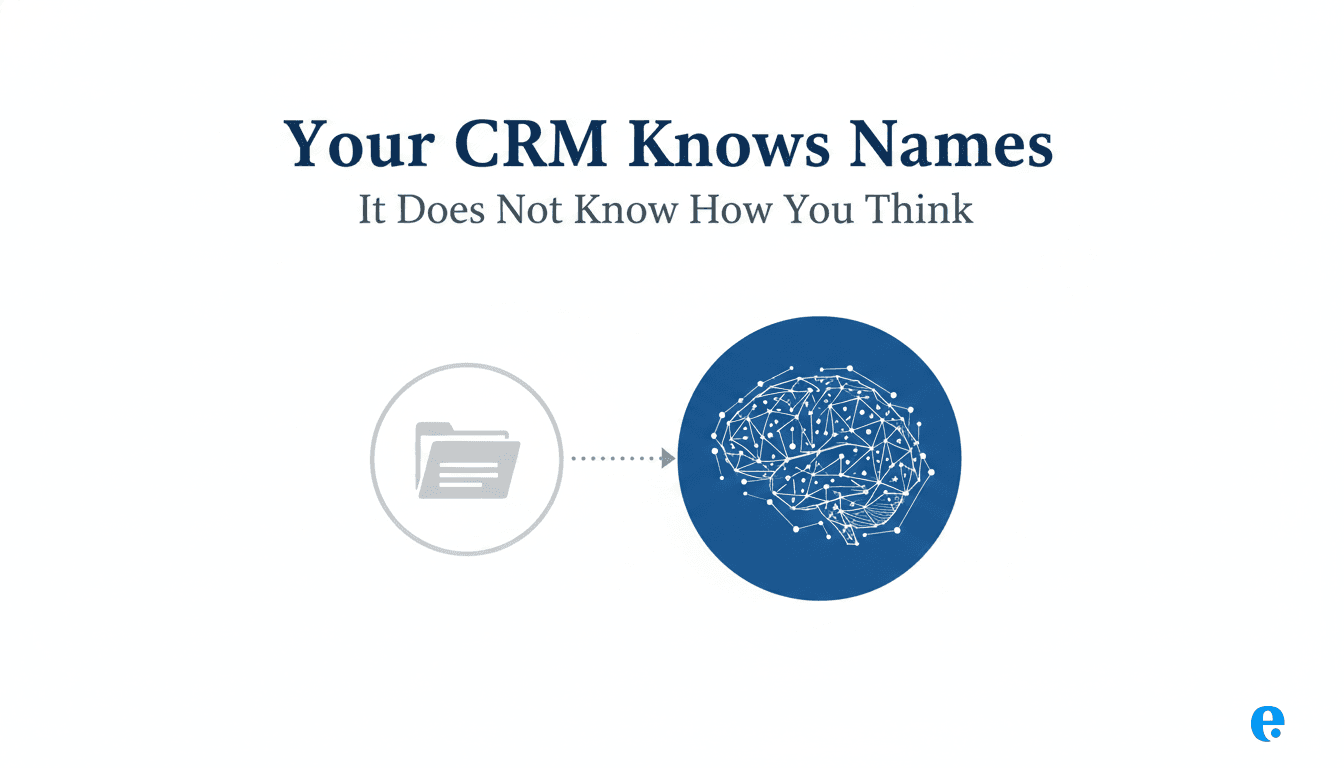
The Decision You Keep Remaking
The cost is not making the call. It is making the same call two, three, four times because the first time never actually closed.
You made the call on Tuesday. By Friday it is back on your desk.
Someone on the team has a new concern. A different person was not in the room when you decided. A vendor said something that reopened the question. So the thing you already settled is sitting in your inbox again, wearing a fresh subject line, asking for the same yes you already gave.
This is the part of the founder day that never shows up on a calendar. Not the decision. The redeciding. The quiet tax of making the same call two, three, four times because the first time never actually closed.
You think you have a time problem. You do not. You have a decision that will not stay decided.
The cost is not the decision. It is the return trip.
Most leaders track how long a decision takes to make. Almost nobody tracks how many times the same decision comes back.
That second number is where the day goes.
Here is the shape of it. A decision gets made in conversation. It lives in someone's memory, or in a thread, or in the tail end of a meeting that ran long. Nothing wrote down what was decided, why, and what was now closed. So the decision has no edges. And anything without edges can be picked back up.
A few weeks later a capable person on your team, acting in good faith, reopens it. They were not being difficult. They simply never saw a clear record that the matter was settled and the reasons it was settled. To them it still looks open. So they bring it back. And you spend twenty minutes relitigating ground you already covered, often arriving at the same answer, now more tired.
Multiply that across a week. The meetings that exist to revisit. The threads that reargue. The escalations that land on you because the team is not sure the call is firm. None of it shows up as a line item. All of it eats the hours you swear you do not have.
This is Decision Cost. Not the price of deciding. The price of deciding the same thing more than once.
Why the same decision keeps coming back
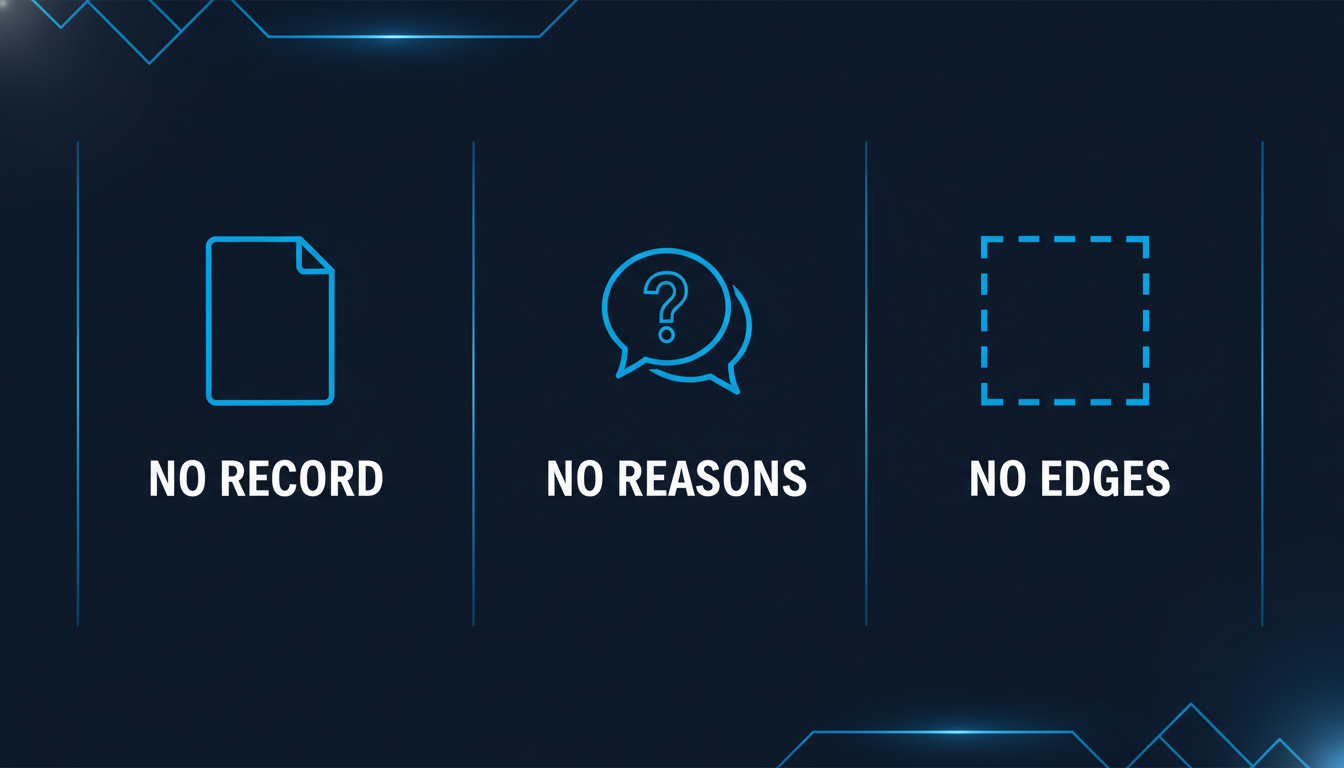
Decisions reopen for three reasons, and all three are about what got written down, not about who is on the team.
The first is no record. The decision was made out loud and never captured anywhere a person could find it later. If it is not written, it is not closed. It is just a thing you remember and they do not.
The second is no reasons. Even when the answer was recorded, the why was not. So when conditions shift a little, the team cannot tell whether the old call still holds, because they never knew what it rested on. Without the reasoning, every change of weather looks like a reason to reopen.
The third is no edges. Nothing said which parts were now off the table. So the whole thing stays soft. A capable person pokes at one corner, the corner gives, and suddenly the entire decision is open for discussion again.
This pattern does not care what business you run. A founder led services firm reopens scope and pricing. A product team reopens the roadmap. An operator reopens a vendor choice that was settled a quarter ago. Different rooms, same leak. The decision was made, but it was never given a shape that could survive contact with a busy week.
No memo, no meeting
Sharran Srivatsaa, President of Acquisition.com, runs a rule that sounds almost too small to matter. No memo, no meeting. If you want time on the calendar to decide something, you write the memo first. One page. The situation, the real question, your recommendation, and the open items. If you cannot write it, you are not ready to meet, and the meeting would have been a group thinking out loud anyway.
Amazon built a version of the same discipline across a large company, replacing slide decks with written narratives so that a decision had to hold together as an argument before anyone got in the room. The form is different. The instinct is identical. Make the thinking visible before you spend people on it.
The power is not the writing. It is what the writing forces.
A memo makes you state the decision in a form that can be pointed at later. It gives the decision edges. Once a call has edges, it is much harder to wander back into it by accident, because there is a record that says this was decided, here is why, and here is what is now closed.
I took that rule and added two moves that make a decision close even harder.
The Locked list
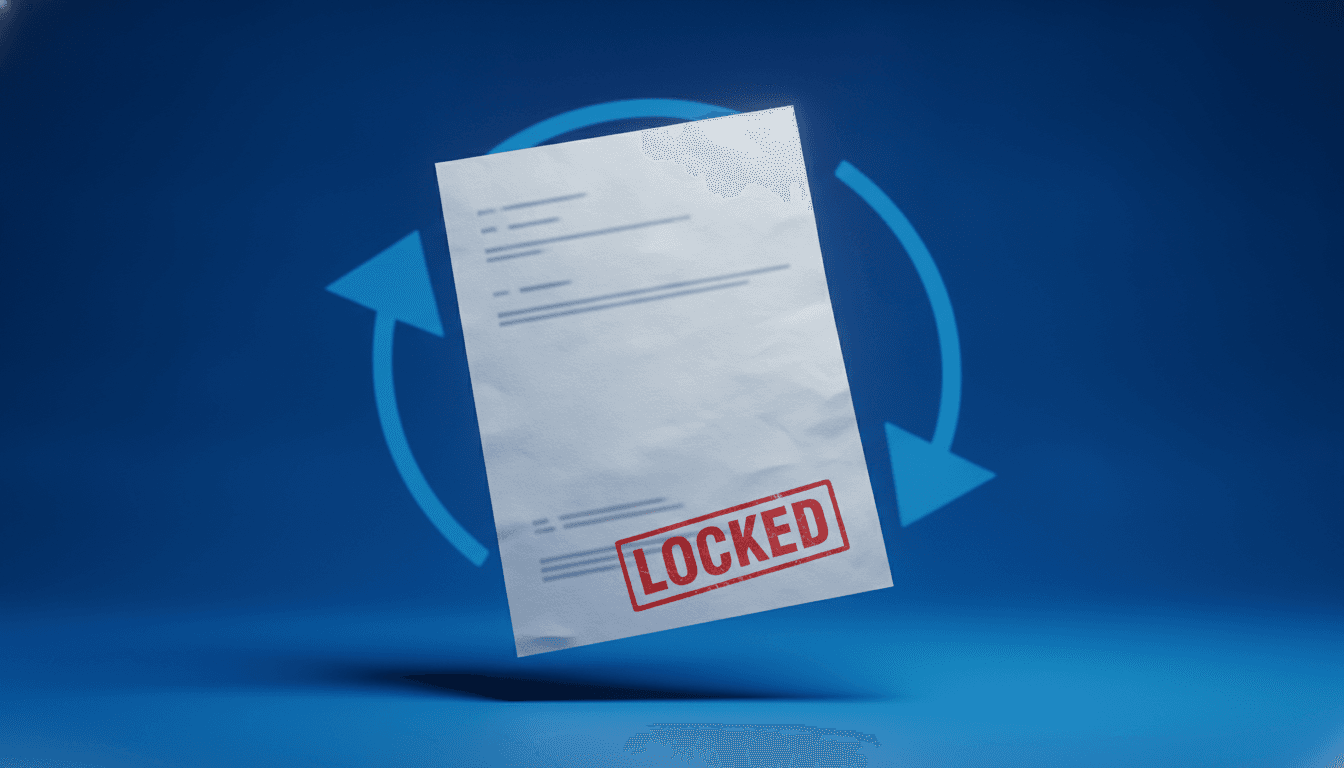
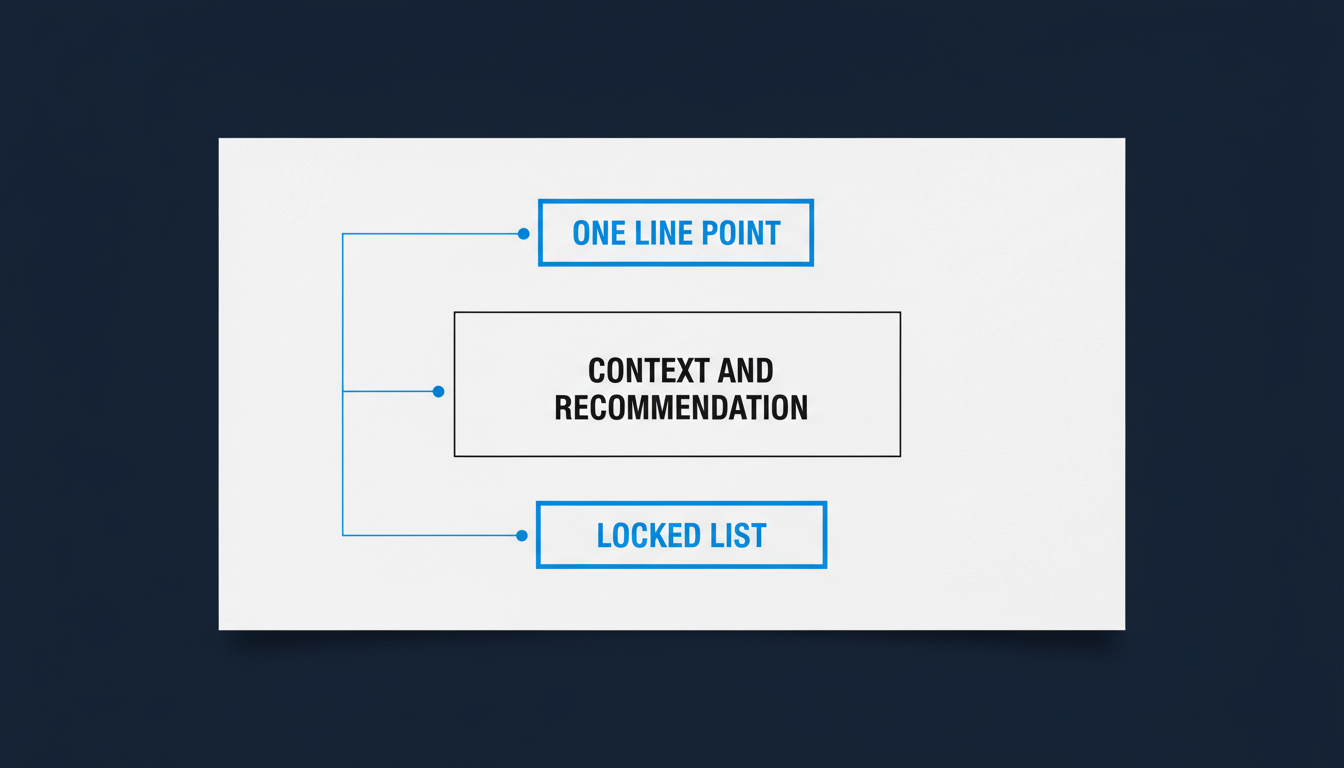
At the bottom of the page, you write down what is now settled and not up for debate. Not the whole decision. The specific things that are off the table. Pricing is locked. The launch date is locked. We are not reopening the vendor question this quarter. The Locked list is the part most people skip, and it is the part that does the work. It tells the next capable person exactly which doors are closed, so they stop knocking on them.
The one line point
Before the context, before the framing, you write the entire decision in a single sentence a tired person could understand at a glance. We are choosing this over that, and we are doing it now. If you cannot get the decision into one line, the decision is not actually clear yet, and that is the real reason it keeps coming back.
Do it by hand first
You do not need a system to start. You need one page and the discipline to give your next real decision a clear edge.
Try it on the very next call that matters. Before the meeting, write the one line point. Write the short context. Write your recommendation. Write the Locked list. Then watch what happens to the conversation when everyone walks in already knowing what is on the table and what is not. The meeting gets shorter. The decision gets firmer. And it stops coming back.
Picture how it plays out. A founder keeps getting pulled into the same question about how far to stretch on a client commitment. It surfaces in a sales sync, then an ops review, then a one on one, each time as if for the first time. So she writes one page. One line at the top: we are holding current scope on this account until the next review. A short context. Her recommendation and the reasoning behind it. Then a Locked list. Scope is locked. Timeline is locked. We are not reopening this before the review date.
She sends it. The next time the question drifts toward someone's desk, there is a place to point. The decision has a home. The team stops bringing it to her, because the answer is already written, already reasoned, already closed. The relitigation does not happen, because there is nothing left to argue.
That is the win people mistake for time management. It is not that she found more hours. It is that she stopped paying for the same decision twice.
When you want to make this a habit instead of a one off, we built a free tool that hands you the page without the blank page problem. You fill in the fields, including the Locked list and the one line point, and watch the memo build in front of you, then save it as a PDF or copy it as text. It is leverage by hand. You can find the Decision Memo Builder at ecrofmedia.com/tools/decision-memo.html.
The founder who learns to decide once does not work fewer decisions. They work each decision a single time. That is where the day comes back.
Where this comes from
- Acquisition.com: Sharran Srivatsaa, President, on the no memo, no meeting operating rule
- Amazon shareholder letter: narrative memos in place of slide decks before decisions
- Harvard Business Review: Stop the Meeting Madness, on the hidden cost of meetings
- Asana: Anatomy of Work, on time lost to work about work
See this in your own business.
We run a live workshop where we walk through exactly where your business intelligence is accessible and where it is still trapped. You will leave with a clear picture of what needs to be packaged first.
Join the Live Workshop